

 Image 1 of 1
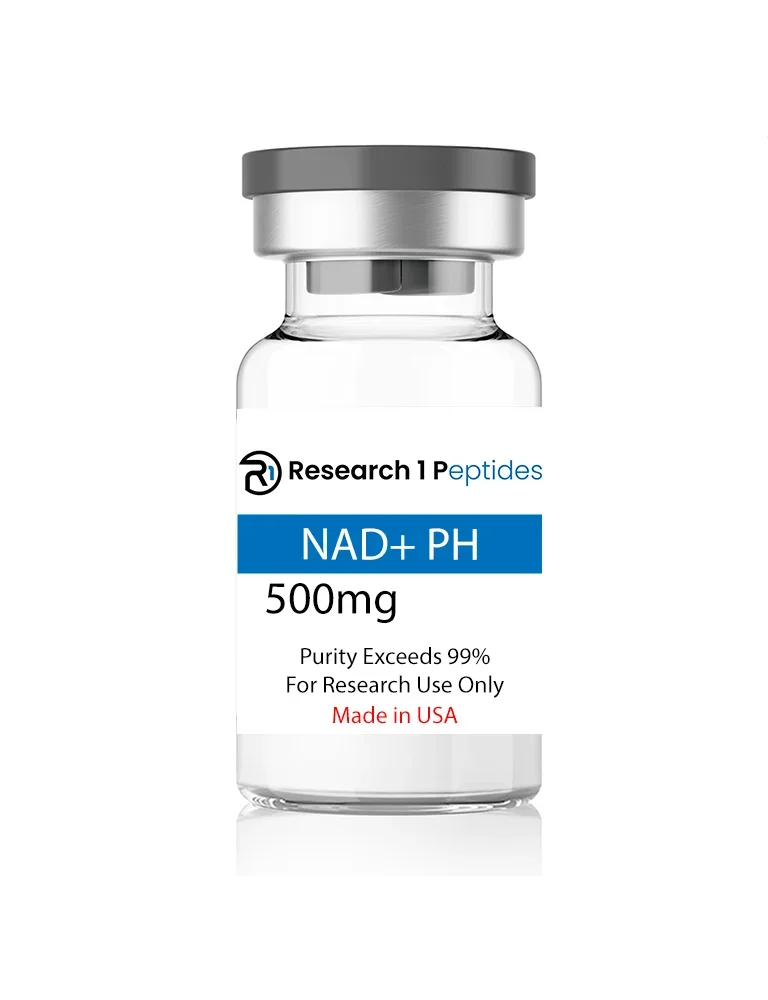
NAD+ 500 – PH Balanced
NAD+ Boosting Compounds (NMN / NR + Peptide Modulation): Cellular Energy & Mitochondrial Research Complex
Product Specifications
– Formula: NMN + NR + peptide modulators
– Molecular Weight: Variable (blend dependent)
– Purity: ≥99% (HPLC verified)
– Disclaimer: For Research Use Only. Not for human or veterinary use.
Integrated NAD+ Precursors with Peptide Modulators: Research Rationale & Synergy
The NAD+ Boosting Compounds blend was designed for researchers exploring how cells produce, manage, and sustain energy. It combines Nicotinamide Mononucleotide (NMN) and Nicotinamide Riboside (NR), two of the most studied NAD⁺ precursors, with specialized peptide modulators that enhance molecular stability and performance under laboratory conditions. Together, these components create a robust research platform for studying cellular metabolism, oxidative balance, and mitochondrial function-core processes essential to understanding energy generation and bioenergetic resilience.
When NMN and NR are combined with peptide modulators, the research benefits multiply. Peptides can stabilize fragile molecules, improve bioavailability, and influence receptor-mediated processes that drive intracellular communication. This creates an experimental model that mimics real cellular dynamics more closely, allowing scientists to examine NAD+ driven redox cycles, oxidative stress management, and energy transduction under controlled conditions. These qualities make NAD⁺ Boosting Compounds a valuable tool for studying cellular recovery, stress adaptation, and energy restoration pathways.
NAD+ Biology in Energy & Genome Maintenance, with Sirtuin-Dependent Regulation
In every living cell, NAD+ (Nicotinamide Adenine Dinucleotide) plays a central role in converting nutrients into energy. It serves as a coenzyme in redox reactions, helping drive electron transfer through pathways such as glycolysis and the Krebs cycle. Beyond energy conversion, NAD+ is essential for DNA repair, chromatin remodeling, and gene regulation through enzymes like sirtuins and PARPs. As cellular NAD+ levels naturally decline with age or stress, laboratory models using NMN and NR help scientists study how restoring NAD+ affects mitochondrial efficiency, protein regulation, and adaptive signaling.
Another major area of exploration involves sirtuin activation, as sirtuins are NAD+-dependent enzymes that govern gene silencing, protein deacetylation, and metabolic adaptation. By replenishing NAD+ levels experimentally, scientists can observe how sirtuins influence transcription, repair pathways, and overall cellular balance. This peptide-supported model makes it possible to study these effects with greater precision and consistency than with NAD+ precursors alone.
Redox Signaling & Mitochondrial Function: Models and Longitudinal Readouts
A key focus of NAD plus research involves understanding its impact on redox signaling, the delicate balance of oxidation and reduction that regulates cellular health. Changes in NAD+ levels can shift this equilibrium, influencing enzyme activity, protein folding, and mitochondrial resilience. Experiments using NMN and NR in combination with peptides enable researchers to investigate how these compounds affect metabolic performance and cellular longevity mechanisms. Such studies are critical for building knowledge about how cells adapt to oxidative or environmental stress without crossing into therapeutic research claims.
Moreover, the synergy between NAD+ precursors and peptides enables reproducible modeling of mitochondrial performance and redox equilibrium. This allows scientists to measure long-term biochemical effects while ensuring consistency in replicable trials, an essential feature for ongoing research in metabolic signaling, aging studies, and cellular bioenergetics.
HPLC/MS-Validated Purity and Reproducibility Across Assays
Each batch of NAD+ Boosting Compounds is validated through HPLC and Mass Spectrometry testing to confirm purity and structural integrity. The formulation ensures reliable and reproducible outcomes across multiple assays, supporting applications in molecular biology, biochemistry, and pharmacological peptide research. Researchers can explore how NAD+ restoration impacts ATP synthesis, enzyme kinetics, or metabolic flux within a well-controlled, high-purity environment.
Research-Only Formulation for Metabolism, Sirtuin, and Resilience Studies
In conclusion, NAD+ Boosting Compounds (NMN / NR + Peptide Modulation) provide researchers with a high-precision, high-purity formulation for studying energy metabolism, sirtuin regulation, and cellular resilience. Their integrated design bridges the fields of peptide biochemistry and NAD+ metabolism, creating a new standard for laboratory-based exploration of molecular energy systems and redox biology. This compound is exclusively intended for experimental and academic use, offering scientists a consistent and advanced model to deepen their understanding of energy regulation at the cellular level. For Research Use Only. Not for human or veterinary use. Information presented here is based on published studies and provided solely for scientific reference.
Features / Highlights
Supports NAD+ metabolism and redox research. Enhances mitochondrial and cellular energy studies. Integrates NMN, NR, and peptide modulators for advanced modeling. Verified purity (≥99%, HPLC-tested). Ensures reproducibility across multiple experimental setups. Designed strictly for Research Use Only (RUO) standards
Selected Research References
1.Mills KF et al. Cell Metabolism (2016) – Long-term administration of NMN mitigates age-associated physiological decline in mice. 2.Trammell SA et al. Nature Communications (2016) – NR is uniquely bioavailable in mice and humans. 3.Yoshino J et al. Cell Metabolism (2018) – NAD plus intermediates: The biology and potential of NMN and NR.
Storage Instructions
Store at −20°C in a tightly sealed container. Protect from light and moisture. Avoid repeated freeze–thaw cycles to maintain purity and stability.
NAD+ Boosting Compounds (NMN / NR + Peptide Modulation): Cellular Energy & Mitochondrial Research Complex
Product Specifications
– Formula: NMN + NR + peptide modulators
– Molecular Weight: Variable (blend dependent)
– Purity: ≥99% (HPLC verified)
– Disclaimer: For Research Use Only. Not for human or veterinary use.
Integrated NAD+ Precursors with Peptide Modulators: Research Rationale & Synergy
The NAD+ Boosting Compounds blend was designed for researchers exploring how cells produce, manage, and sustain energy. It combines Nicotinamide Mononucleotide (NMN) and Nicotinamide Riboside (NR), two of the most studied NAD⁺ precursors, with specialized peptide modulators that enhance molecular stability and performance under laboratory conditions. Together, these components create a robust research platform for studying cellular metabolism, oxidative balance, and mitochondrial function-core processes essential to understanding energy generation and bioenergetic resilience.
When NMN and NR are combined with peptide modulators, the research benefits multiply. Peptides can stabilize fragile molecules, improve bioavailability, and influence receptor-mediated processes that drive intracellular communication. This creates an experimental model that mimics real cellular dynamics more closely, allowing scientists to examine NAD+ driven redox cycles, oxidative stress management, and energy transduction under controlled conditions. These qualities make NAD⁺ Boosting Compounds a valuable tool for studying cellular recovery, stress adaptation, and energy restoration pathways.
NAD+ Biology in Energy & Genome Maintenance, with Sirtuin-Dependent Regulation
In every living cell, NAD+ (Nicotinamide Adenine Dinucleotide) plays a central role in converting nutrients into energy. It serves as a coenzyme in redox reactions, helping drive electron transfer through pathways such as glycolysis and the Krebs cycle. Beyond energy conversion, NAD+ is essential for DNA repair, chromatin remodeling, and gene regulation through enzymes like sirtuins and PARPs. As cellular NAD+ levels naturally decline with age or stress, laboratory models using NMN and NR help scientists study how restoring NAD+ affects mitochondrial efficiency, protein regulation, and adaptive signaling.
Another major area of exploration involves sirtuin activation, as sirtuins are NAD+-dependent enzymes that govern gene silencing, protein deacetylation, and metabolic adaptation. By replenishing NAD+ levels experimentally, scientists can observe how sirtuins influence transcription, repair pathways, and overall cellular balance. This peptide-supported model makes it possible to study these effects with greater precision and consistency than with NAD+ precursors alone.
Redox Signaling & Mitochondrial Function: Models and Longitudinal Readouts
A key focus of NAD plus research involves understanding its impact on redox signaling, the delicate balance of oxidation and reduction that regulates cellular health. Changes in NAD+ levels can shift this equilibrium, influencing enzyme activity, protein folding, and mitochondrial resilience. Experiments using NMN and NR in combination with peptides enable researchers to investigate how these compounds affect metabolic performance and cellular longevity mechanisms. Such studies are critical for building knowledge about how cells adapt to oxidative or environmental stress without crossing into therapeutic research claims.
Moreover, the synergy between NAD+ precursors and peptides enables reproducible modeling of mitochondrial performance and redox equilibrium. This allows scientists to measure long-term biochemical effects while ensuring consistency in replicable trials, an essential feature for ongoing research in metabolic signaling, aging studies, and cellular bioenergetics.
HPLC/MS-Validated Purity and Reproducibility Across Assays
Each batch of NAD+ Boosting Compounds is validated through HPLC and Mass Spectrometry testing to confirm purity and structural integrity. The formulation ensures reliable and reproducible outcomes across multiple assays, supporting applications in molecular biology, biochemistry, and pharmacological peptide research. Researchers can explore how NAD+ restoration impacts ATP synthesis, enzyme kinetics, or metabolic flux within a well-controlled, high-purity environment.
Research-Only Formulation for Metabolism, Sirtuin, and Resilience Studies
In conclusion, NAD+ Boosting Compounds (NMN / NR + Peptide Modulation) provide researchers with a high-precision, high-purity formulation for studying energy metabolism, sirtuin regulation, and cellular resilience. Their integrated design bridges the fields of peptide biochemistry and NAD+ metabolism, creating a new standard for laboratory-based exploration of molecular energy systems and redox biology. This compound is exclusively intended for experimental and academic use, offering scientists a consistent and advanced model to deepen their understanding of energy regulation at the cellular level. For Research Use Only. Not for human or veterinary use. Information presented here is based on published studies and provided solely for scientific reference.
Features / Highlights
Supports NAD+ metabolism and redox research. Enhances mitochondrial and cellular energy studies. Integrates NMN, NR, and peptide modulators for advanced modeling. Verified purity (≥99%, HPLC-tested). Ensures reproducibility across multiple experimental setups. Designed strictly for Research Use Only (RUO) standards
Selected Research References
1.Mills KF et al. Cell Metabolism (2016) – Long-term administration of NMN mitigates age-associated physiological decline in mice. 2.Trammell SA et al. Nature Communications (2016) – NR is uniquely bioavailable in mice and humans. 3.Yoshino J et al. Cell Metabolism (2018) – NAD plus intermediates: The biology and potential of NMN and NR.
Storage Instructions
Store at −20°C in a tightly sealed container. Protect from light and moisture. Avoid repeated freeze–thaw cycles to maintain purity and stability.